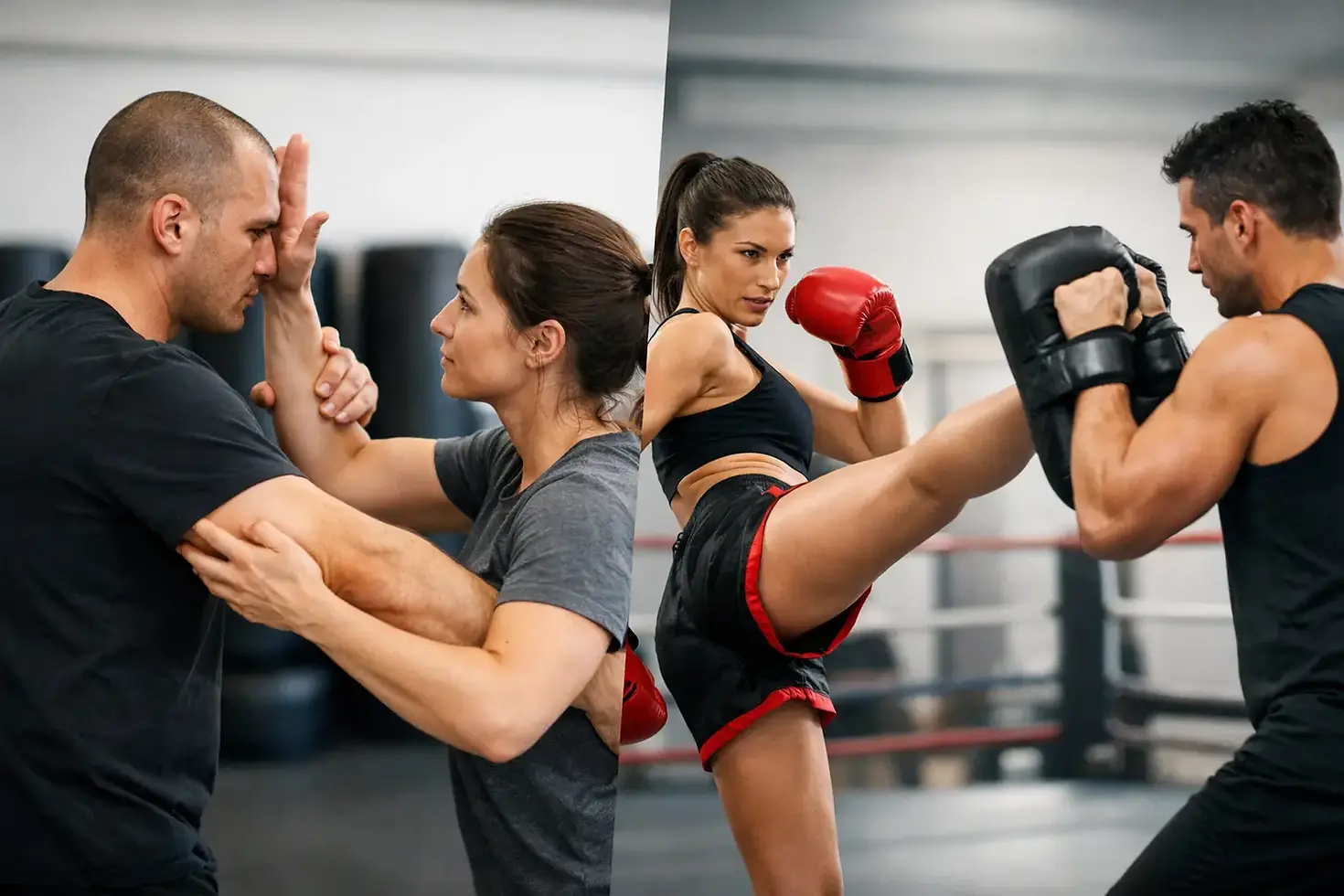
Self Defense vs Kickboxing: Which Fits You?
- J-P Perron
- Jun 26
- 5 min read

A lot of people start with the same question: self defense vs kickboxing - which one actually prepares you for real life, and which one is the better fit for your goals? That question matters, because these two training paths may look similar from the outside, but they are built around very different outcomes.
If your main goal is fitness, timing, and striking skill, kickboxing can be an excellent choice. If your main goal is personal protection, awareness, control under pressure, and handling messy situations that do not look like a clean match, self-defense training usually makes more sense. The right answer depends on what you need your training to do for you.
Self defense vs kickboxing: the core difference
Kickboxing is a combat sport. Self-defense is a protection mindset supported by physical skills. That is the clearest place to start.
In kickboxing, training usually revolves around stance, footwork, punches, kicks, distance management, conditioning, pad work, partner drills, and sparring. It develops toughness, coordination, speed, and the ability to deliver and defend against strikes. It is honest training, and done well, it builds real athletic ability.
Self-defense training starts from a different question: how do you avoid harm and get home safely? That means the training often includes awareness, boundary setting, verbal skills, posture, escape tactics, clinch work, control positions, takedown defense, and responses to common assaults. It may also include legal and ethical judgment, because winning an exchange is not the same as making a good decision.
This is where people get confused. A skilled kickboxer may absolutely be harder to victimize than an untrained person. Better balance, timing, confidence, and striking power matter. But sport striking on its own does not cover the full range of problems that show up in actual self-protection.
What kickboxing does very well
Kickboxing deserves respect. It is demanding, disciplined training, and it produces attributes that carry over into many areas of life.
First, it develops composure under pressure. Hitting pads is one thing. Working with a resisting partner is another. Learning to stay calm while someone is moving toward you with speed and intent can build confidence quickly.
Second, it improves cardio, coordination, and power. Many adults walk into their first class wanting to get in shape, and kickboxing gives them a strong reason to keep showing up. The workouts are engaging, measurable, and challenging.
Third, it teaches clean striking mechanics. If you ever do need to create space and escape, knowing how to move, guard your head, and deliver force effectively is useful. Good kickboxing instruction can sharpen those tools faster than many general fitness classes ever will.
For teens and adults who enjoy competition, timing, and athletic development, kickboxing can be deeply rewarding. It gives structure, accountability, and a clear training progression.
Where kickboxing has limits for self-protection
The problem is not that kickboxing is ineffective. The problem is assuming it covers everything.
Real violence is rarely organized. It may start with intimidation, crowding, grabbing, shoving, or a sucker punch. It may happen in tight spaces, on uneven ground, near walls, in a parking lot, or with other people involved. You may be carrying a bag, protecting a child, or reacting from surprise. Those conditions change the equation.
Kickboxing also works within rules and expectations. Even hard sparring still happens in a controlled environment with agreed boundaries. That is valuable, but it is not the same as dealing with ambush, verbal escalation, or close-range physical control.
Many people also overlook the clinch and grappling gap. If someone crashes distance, grabs clothing, tackles, or ties up your arms, pure striking skill can get crowded quickly. That is one reason serious self-defense programs train outside the range where kickboxing is strongest.
What self-defense training is really for
Good self-defense training is not paranoia and it is not macho posturing. It is practical preparation.
At its best, self-defense teaches you to recognize trouble early, manage space, use your voice, stay balanced, and respond decisively if avoidance fails. It also teaches you when not to engage. That part matters. The strongest option is often to leave before the situation becomes physical.
Physical self-defense should also account for the way people actually get attacked. That includes wrist grabs, headlocks, pushes, bear hugs, lapel grabs, ground pins, and rushed close-contact assaults. Not every scenario is equally common, and not every technique works under stress. The training has to be pressure-tested and rooted in sound mechanics.
A strong self-defense program also develops control, not just impact. Sometimes the goal is to escape. Sometimes it is to restrain without unnecessary harm. For parents, teens, and professionals who may face legal, workplace, or ethical consequences, that distinction is important.
Self defense vs kickboxing for kids, teens, and adults
This choice often depends on who is training and why.
For children, self-defense-based martial arts usually offer broader life value. Kids need confidence, awareness, discipline, and boundaries more than they need ring skills. A structured dojo environment can help them learn respect, posture, emotional control, and how to respond to common social and physical pressure without feeding ego.
For teens, it depends on temperament and goals. Some teens thrive in kickboxing because they love movement, challenge, and conditioning. Others need the confidence and structure that come from self-protection training tied to discipline and character development. The best programs do not just make teens tougher. They make them steadier.
For adults, the question is practical. If you want a demanding workout and enjoy striking, kickboxing may be the better fit. If your priority is safety, situational awareness, and handling unpredictable encounters, self-defense should be the foundation. Many adults benefit from both, but the order matters. Protection first, attributes second, is often the wiser path.
The best training often includes both
This does not have to be framed as one good option and one bad option. In reality, self-defense and kickboxing can complement each other when taught with the right purpose.
Kickboxing sharpens timing, distance, conditioning, and resilience. Self-defense adds awareness, decision-making, close-range control, escape tactics, and context. Together, they form a more complete person.
The key is not collecting techniques. The key is training methods that match the goal. If a school says it teaches self-defense, but everything revolves around combinations on pads with no attention to grabs, clinch pressure, verbal dynamics, or escape, there is a gap. If a school claims realism but never develops timing, pressure tolerance, or athletic ability, there is also a gap.
A mature martial arts program understands both sides. It respects the value of sport training while staying honest about the difference between competition and personal protection.
How to choose between self defense vs kickboxing
Start by being honest about your primary goal. Not the goal that sounds impressive, but the one that will keep you committed.
If you want to get in shape, enjoy striking, and like the energy of pad work and sparring, kickboxing may be exactly what you need. If you want to feel more capable in everyday life, protect your family, improve awareness, and train for messy real-world situations, self-defense is the better starting point.
Then look at how the school teaches. Watch whether the instruction is disciplined and structured. See if students are learning control, respect, and judgment along with physical skill. Pay attention to ego. A room full of intensity without humility is not a good sign.
Ask simple questions. What situations are being trained? How often do students work under pressure? Is the program age-appropriate? Does the school build confidence without creating recklessness? The answers will tell you more than flashy language ever will.
For many families and working adults, a self-protection-based martial arts program offers the strongest long-term value because it connects fitness, discipline, and practical readiness. That is especially true when the instruction is rooted in tradition but taught for modern life, as at Vanguard Academy.
The best choice is the one that helps you become calmer, stronger, and harder to shake when life gets uncomfortable. Train with purpose. Build real skill. Let confidence come from preparation, not assumption.


Comments