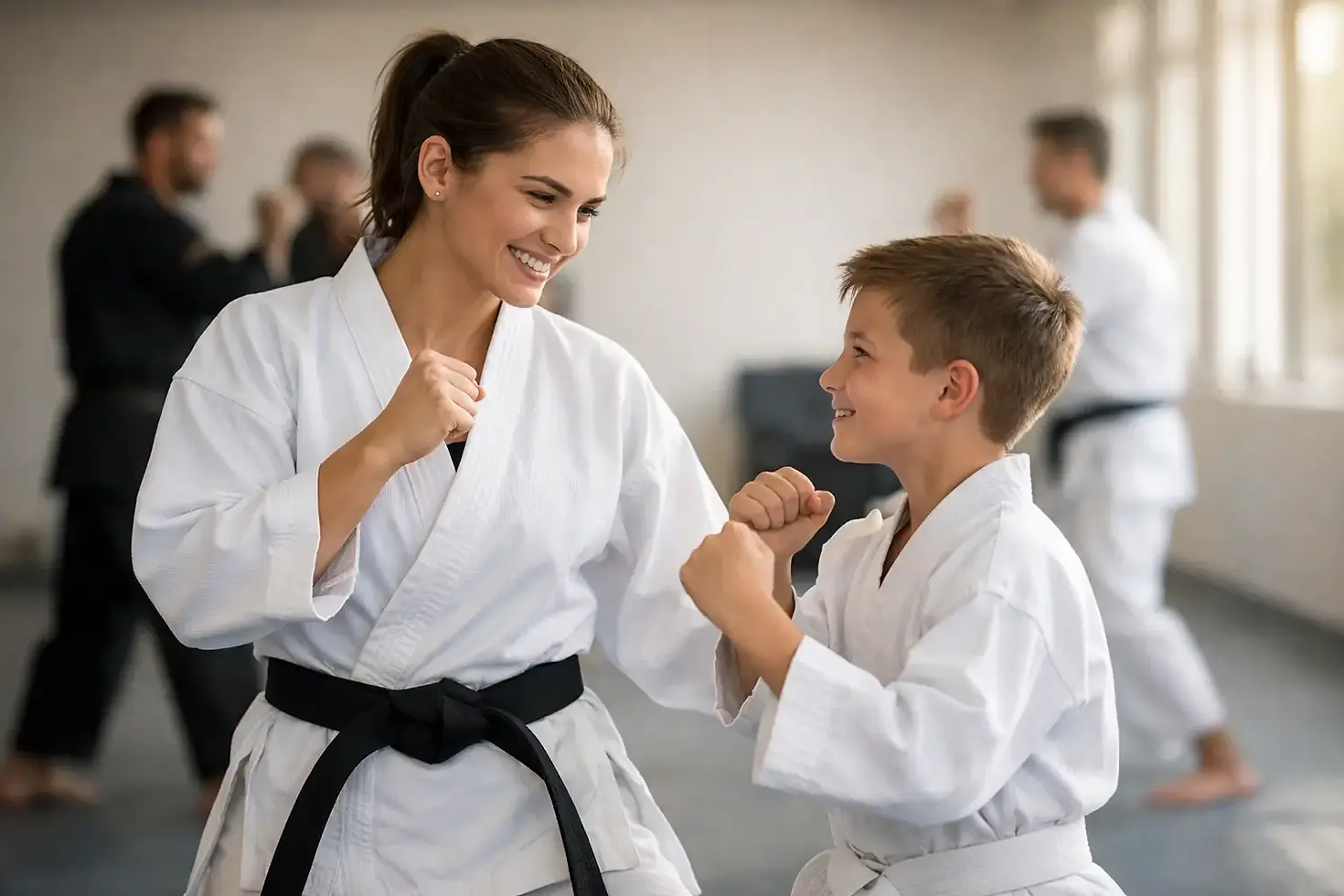
Confidence Building Martial Arts That Work
- J-P Perron
- Mar 21
- 5 min read

A child who avoids eye contact on day one can stand taller within a few months. A teen who second-guesses every decision can begin speaking with more certainty. An adult who feels uneasy walking alone can start moving through daily life with a steadier mind. That is what confidence building martial arts should do - not create arrogance, but develop calm, capable people who know how to carry themselves under pressure.
The difference matters. Real confidence is not loud. It does not come from collecting belts, posting training clips, or trying to dominate a room. It comes from repeated effort, honest correction, and the knowledge that you can handle yourself with discipline if life becomes difficult.
What confidence building martial arts actually build
When people hear the word confidence, they often picture boldness. In training, confidence is something more useful. It is composure. It is posture. It is learning to stay present when something feels uncomfortable. It is the ability to listen, respond, and act without panic.
Martial arts can build that because training places students in controlled stress. You learn a new movement, struggle with timing, get corrected, try again, and improve. Over time, that process changes how you see yourself. You stop defining yourself by what feels hard in the moment. You start trusting your ability to learn.
For children, this often shows up as better focus, stronger boundaries, and more willingness to speak up. For teens, it can mean less hesitation and more self-respect. For adults, it often becomes a quiet sense of readiness - not because they expect trouble, but because they no longer feel helpless if trouble appears.
Why some martial arts build confidence better than others
Not every school develops confidence in the same way. Some produce excellent athletes. Some emphasize forms and tradition. Some focus almost entirely on competition. None of those are automatically wrong, but they serve different goals.
If the goal is confidence for real life, the training should connect discipline with practical skill. Students need structure, but they also need to understand why they are doing what they are doing. They need standards, clear progression, and training partners who help them improve rather than intimidate them.
That is where many people get discouraged. If a school is built on ego, students may feel pressure instead of growth. If classes are chaotic, students do not gain a sense of mastery. If training is only theoretical, confidence stays fragile because it has never been tested.
Confidence grows best in an environment where challenge is real, but purposeful. You should be pushed, not humiliated. Corrected, not belittled. Held to a standard, not compared for entertainment.
Confidence building martial arts for kids and teens
For younger students, confidence is closely tied to routine and earned progress. Children do not become more confident because an instructor tells them they are amazing every class. They become more confident when they bow in properly, follow directions, practice with control, and see themselves improve.
That is one reason traditional martial arts remain so valuable. Structure teaches children how to behave when they are nervous. Respect teaches them how to carry themselves around others. Drilling teaches patience. Partner work teaches awareness and self-control.
There is also a practical side. Kids who understand distance, posture, verbal boundaries, and basic self-protection often appear less vulnerable. They tend to move with more certainty. That alone can change social dynamics at school and in public settings.
Teens benefit for slightly different reasons. At that age, confidence is often shaken by comparison, social pressure, and uncertainty about identity. Martial arts give them a place where performance is not based on popularity. Effort matters. Humility matters. Consistency matters.
A teen who trains seriously learns that confidence is not a mood. It is a habit. Show up. Work. Accept correction. Improve. That lesson carries into school, work, and relationships.
Adults need confidence too
Adults often think confidence training is mainly for children, but many adults carry just as much self-doubt. It simply looks different. It shows up as hesitation, poor posture, anxiety about confrontation, or the feeling that your body cannot do what your mind asks of it.
Good martial arts training addresses that directly. You become more aware of balance, timing, and positioning. You learn how to manage distance. You practice responding under pressure. Just as important, you start seeing your body as capable again.
There is a mental shift that happens when an adult trains consistently. Everyday stress does not disappear, but it becomes easier to manage. You get used to discomfort. You stop quitting the moment something feels awkward or demanding. That kind of resilience reaches far beyond the mat.
For adults interested in self-defense, realism matters. Confidence should be tied to practical ability, not fantasy. A school that teaches awareness, de-escalation, control, and effective defensive tactics gives students something much stronger than false reassurance. It gives them grounded confidence.
The role of traditional Jiu-Jitsu in confidence building
Traditional Jiu-Jitsu is especially effective here because it brings together discipline, technical skill, and practical application. Students are not just exercising. They are learning how to control themselves, understand leverage, and respond with purpose.
That blend matters. A purely fitness-driven class may help someone feel better physically, but confidence built only on exertion can fade quickly. Traditional Jiu-Jitsu asks more of the student. It requires attention to detail, respect for the dojo, and responsibility in how techniques are used.
When that tradition is taught through a modern self-protection lens, the benefits become even stronger. Students gain the values that come from martial arts training while also developing skills that make sense in the real world. That balance helps confidence feel honest. It is not theater. It is trained capability.
What to look for in confidence building martial arts programs
If you are choosing a school for yourself or your child, pay attention to the teaching environment as much as the style. A strong program is not just about what is taught, but how it is taught.
Look for instructors who are calm, clear, and consistent. Watch how they correct mistakes. Notice whether senior students help newer ones or ignore them. Pay attention to whether discipline is built through standards and accountability, or through fear and shouting.
A good confidence-building program should also scale challenge properly. Beginners need to feel safe enough to learn. More advanced students need enough pressure to keep growing. If everything is too easy, confidence becomes shallow. If everything is too intense, students shut down.
The best schools create a culture where effort is respected, humility is expected, and progress is earned. That kind of room changes people.
Confidence is built through repetition, not hype
Many people want confidence to arrive quickly. They hope one class, one seminar, or one motivational message will flip a switch. That is not how lasting confidence works.
Confidence is built through repeated exposure to challenge. You forget a technique, reset, and try again. You struggle with a drill, keep working, and improve. You face discomfort often enough that discomfort loses its power over you.
This is why consistency matters more than excitement. A student who trains steadily over time will usually develop stronger confidence than someone who chases intense experiences without structure. The process is not glamorous, but it works.
That is also why an ego-free dojo matters so much. Students need room to fail without feeling small. They need high standards, but they also need guidance. Real confidence grows where discipline and encouragement exist together.
In communities like Chesterville and the surrounding area, families often want more than an activity. They want a place where children learn respect, teens find direction, and adults develop practical skill with honest instruction. That is the standard a martial arts school should meet.
At Vanguard Academy, that approach is central to the training philosophy. Traditional Jiu-Jitsu, real-world self-defense, and structured development work together to build students who are not only more capable, but more grounded.
If you are looking for confidence building martial arts, choose a school that takes character as seriously as technique. Choose training that develops awareness, discipline, and calm under pressure. The strongest kind of confidence is the kind you earn, one class at a time.


Comments