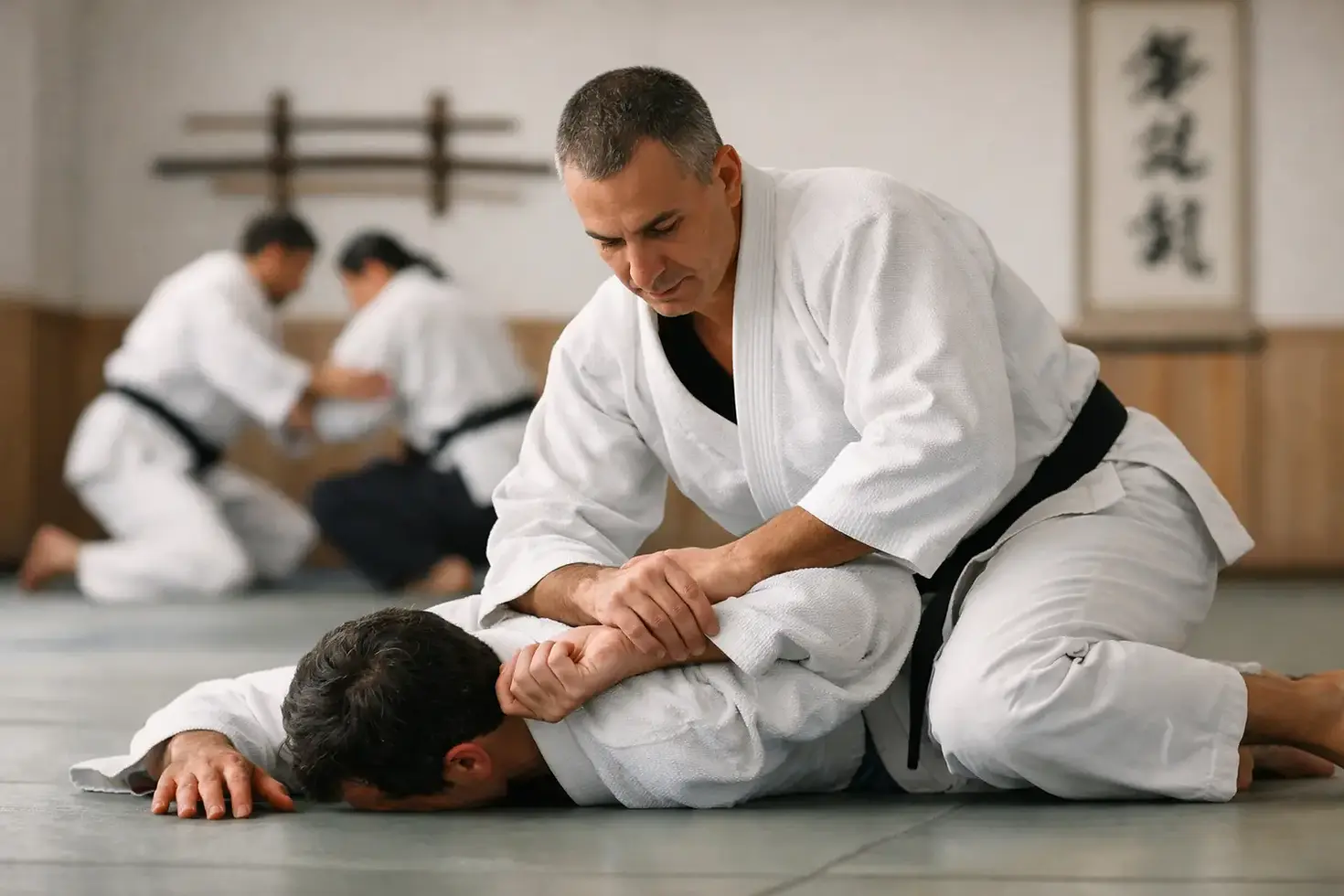
A Practical Guide to Japanese Jiu Jitsu Basics
- J-P Perron
- Aug 13
- 5 min read

A good guide to Japanese Jiu Jitsu basics does not begin with flashy throws or complicated locks. It begins with a safer, more useful question: can you stay balanced, protect yourself, and make sound decisions when someone applies pressure? Those abilities are built through disciplined repetition, respectful training partners, and a willingness to learn the fundamentals before chasing advanced techniques.
Japanese Jiu Jitsu is a traditional martial art built around body mechanics, leverage, timing, and control. It teaches students how to respond when distance closes, grips are established, or an opponent attempts to force a physical confrontation. For children, teens, and adults alike, the deeper value is not simply learning moves. It is developing composure, confidence, humility, and the ability to act with purpose.
What Japanese Jiu Jitsu Teaches
Japanese Jiu Jitsu developed as a system of close-range defensive skills. While schools and lineages differ, training often includes strikes, blocks, grips, escapes, takedowns, throws, pins, joint controls, and ground defense. The goal is not to collect techniques. The goal is to understand how the body moves and how to create a safer position when a situation becomes physical.
That makes it different from a purely competition-focused martial art. Sport training can build excellent timing, conditioning, and technical skill, but rules shape what is practiced. Traditional Japanese Jiu Jitsu can include a broader self-protection framework: awareness, verbal boundaries, distance management, controlled response, and the responsibility to use only the force necessary to get safe.
No martial art makes someone invincible. Real self-protection is often about recognizing trouble early, leaving when possible, and avoiding unnecessary conflict. Physical technique matters when avoidance fails, but judgment comes first.
The Guide to Japanese Jiu Jitsu Basics Starts With Posture
Before a student learns to throw someone, they need a stable base. Posture determines whether you can move, strike, defend a grab, or stay upright during contact. Stand with your feet under you rather than too narrow or too wide. Keep your knees soft, your weight balanced, and your hands in a position where they can protect your head and create space.
A strong stance should be mobile, not frozen. If you cannot step forward, backward, or to the side without crossing your feet and losing balance, the stance needs work. Beginners often focus too much on their feet. Keep your eyes up as well. Looking at the floor may feel safe, but it limits awareness and weakens your posture.
Good posture also supports calm breathing. Tension is natural when someone grabs you, especially during your first classes. The answer is not to become rigid. Learn to breathe, lower your center of gravity, and move with control. That is where usable strength begins.
Breakfalls: Learning to Fall Safely
Breakfalls, often called ukemi, are among the most valuable skills in Japanese Jiu Jitsu. A fall can happen in training, during sports, on ice, or in an unexpected confrontation. Knowing how to reduce impact can protect your head, wrists, elbows, hips, and back.
Students usually begin close to the ground. They learn to tuck the chin, round the body appropriately, and use the arms to disperse force rather than reaching straight back with a locked hand. Training progresses slowly from seated and kneeling positions to standing movement and controlled throws.
There is no prize for rushing breakfalls. Proper instruction, safe mats, and progressive practice matter. A student who can fall calmly is more prepared to train throws with confidence and less likely to panic when balance is disrupted.
Balance, Kuzushi, and Body Position
Japanese Jiu Jitsu relies on leverage, but leverage is not magic. It works best when an opponent's posture is compromised. This is often described as kuzushi, or breaking balance. Rather than trying to overpower a larger person with arm strength, a student learns to move the opponent's weight outside their base.
Simple drills teach this principle. Partners may practice controlled pushing and pulling, grip movement, foot positioning, and directional steps. The lesson is clear: when you pull or push without your own balance, you become easier to counter. When you maintain posture and create an angle, techniques require far less effort.
This is one reason Jiu Jitsu benefits people of different sizes. Size and strength still matter. Anyone claiming otherwise is selling fantasy. But timing, posture, angles, and sound mechanics can narrow the gap and give a smaller person better options.
Essential Defensive Skills for Beginners
New students should expect to practice a small number of movements repeatedly. Repetition is not boring busywork. It is how a response becomes reliable under pressure.
A beginner will often work on wrist-grab releases, clothing-grab defenses, simple blocks, and ways to create distance. The immediate objective is usually not to “win” an exchange. It is to break the grip, protect the head, improve position, and disengage when safe.
From there, students may learn basic takedowns or throws. A throw should never be taught as a stunt. It requires control of balance, direction, and your partner's safe landing. The person applying the technique has a responsibility to remain in control from beginning to end.
Ground skills are equally important. If you are pushed down or stumble during a struggle, you need to understand how to protect your head, frame against pressure, move your hips, and stand up safely when there is room. Ground training does not mean choosing to wrestle on the floor in every situation. On hard surfaces or around multiple people, remaining mobile may be the safer priority.
Control Comes Before Speed
A common beginner mistake is trying to perform every technique fast. Speed without structure creates sloppy movement and unsafe training. Start by learning where your hands, feet, hips, and weight need to be. Work slowly enough to recognize your partner's balance and your own mistakes.
As the movement improves, resistance can increase. This is where practical training becomes valuable. A technique that works only when a partner stands still is not ready. At the same time, full resistance too early can cause frustration or injury. Strong instruction finds the middle ground: realistic enough to test the skill, structured enough for students to learn it correctly.
The Dojo Skills That Matter Outside the Dojo
Japanese Jiu Jitsu training is also training in conduct. Bowing, listening, controlling your ego, and caring for training partners are not empty traditions. They create a culture where people can practice demanding skills without turning the mat into a contest of pride.
For young students, this structure can improve focus and accountability. They learn that confidence is not loudness. It is the quiet knowledge that they can handle challenge, accept correction, and keep going when something is difficult.
For adults, the dojo can be a place to rebuild consistency. Physical fitness improves through regular practice, but so do awareness and stress management. A hard class asks you to be present. You cannot drift through a breakfall, an escape, or a partnered drill and expect good results.
At Vanguard Academy, traditional training is paired with practical self-protection principles so students understand both the technique and the responsibility behind it. The standard is serious, but the environment should remain ego-free. Everyone starts somewhere.
How to Prepare for Your First Class
You do not need prior martial arts experience, exceptional flexibility, or perfect fitness to begin. Wear comfortable athletic clothes unless the school instructs you otherwise, remove jewelry, keep fingernails short, and arrive ready to listen. Hydration helps, but the most important thing to bring is patience.
Expect to be challenged without being expected to know everything. A quality class should give beginners clear instruction, controlled partner work, and room to ask questions. Tell the instructor about injuries, limitations, or concerns before training begins. Smart training adapts when needed; pushing through sharp pain is not discipline.
Progress is rarely dramatic from one class to the next. After several weeks, you may notice that your stance feels steadier, your falls feel less intimidating, and your reactions are becoming calmer. Those are real gains. They form the foundation for more advanced work.
Your first goal is simple: show up, train with humility, and learn one detail well. Strength is built rep by rep, and confidence follows the student who keeps returning to the mat.


Comments