

7 Best Martial Arts for Discipline
- J-P Perron
- 7 days ago
- 6 min read

Some martial arts make you sweat. Some make you compete. The best martial arts for discipline do something deeper - they shape how you carry yourself when class is over. That matters for a child who needs focus, a teen who needs direction, or an adult who wants steadiness under pressure.
Discipline in martial arts is not just about standing still, bowing, or following commands. Real discipline is built through repetition, accountability, respect, and the ability to stay composed when something is difficult. A good school can develop that in almost any style. Still, some martial arts are better suited to that goal than others.
What makes a martial art good for discipline?
Before comparing styles, it helps to define what people usually mean by discipline. Most families are not looking for blind obedience. They want consistency, self-control, resilience, and respect. Adults often want the same things, even if they use different words.
The right martial art usually has a few things in common. It has clear structure. It asks students to practice fundamentals instead of chasing constant entertainment. It creates standards that must be earned, not handed out. And it teaches students to manage emotion, not just movement.
That said, style alone does not guarantee results. A highly traditional art taught with poor leadership can become rigid or empty. A practical self-defense program with strong standards can produce excellent discipline even if it looks less formal on the surface. The instructor, training culture, and expectations matter just as much as the name on the sign.
7 best martial arts for discipline
Japanese Jiu-Jitsu
Japanese Jiu-Jitsu is one of the best martial arts for discipline because it combines tradition, technical depth, and practical control. Students learn to follow structure, pay attention to detail, and respect process. Progress usually comes through steady effort, not flashy athleticism.
This matters for both kids and adults. A child learns to listen, move with purpose, and stay calm while learning partner work. An adult learns restraint, awareness, and how to function under pressure without relying on brute force. In a well-run dojo, discipline is not separate from training - it is built into every class.
Another strength is balance. Japanese Jiu-Jitsu teaches standing techniques, self-protection concepts, breakfalls, control holds, and situational awareness. That gives students a broader sense of responsibility than a purely sport-focused format. At Vanguard Academy, this blend of traditional Jiu-Jitsu and real-world self-protection is exactly why disciplined training becomes practical growth, not just a hobby.
Karate
Karate has earned its reputation for discipline for good reason. In many schools, classes are structured, rank standards are clear, and students spend time refining basics with precision. That repetition can be very powerful, especially for children who benefit from routine and visible progress.
Karate also teaches posture, control, and respect in a way that is easy for families to understand. A student learns when to speak, when to listen, and how to push through frustration. Those are valuable habits beyond the dojo.
The trade-off is that karate varies a lot from school to school. Some programs preserve strong standards. Others lean heavily into fast promotions, games, or tournament performance. If discipline is the priority, parents and adult students should pay close attention to how the school runs class, not just which karate style it teaches.
Judo
Judo builds discipline through pressure, timing, and accountability. You cannot force good technique in judo for long. If your balance is poor, if your focus drifts, or if your effort drops, the training makes that clear very quickly.
That honesty is one of judo's best qualities. Students learn to fall safely, work hard, and respect training partners. They also learn humility. Being thrown tends to strip away ego fast.
For many teens and adults, judo is excellent for mental toughness and composure. For younger children, it can also be strong, provided the instruction is age-appropriate and safety is taken seriously. The main consideration is that judo can be physically demanding, so discipline grows through grit as much as formal structure.
Taekwondo
Taekwondo is often a strong entry point for discipline, especially for kids. Classes usually have clear rituals, instructor-led structure, and visible milestones through belt progression. For a child who needs direction, that can be motivating.
It also develops body control and focus. Kicking drills, forms, and partner work require attention and repetition. Students learn that progress comes from practice, not from shortcuts.
The difference between schools matters here too. Some taekwondo programs are excellent at building confidence and discipline. Others become too focused on fast advancement or performance. Families should look for a school where respect, effort, and behavior standards are enforced consistently.
Brazilian Jiu-Jitsu
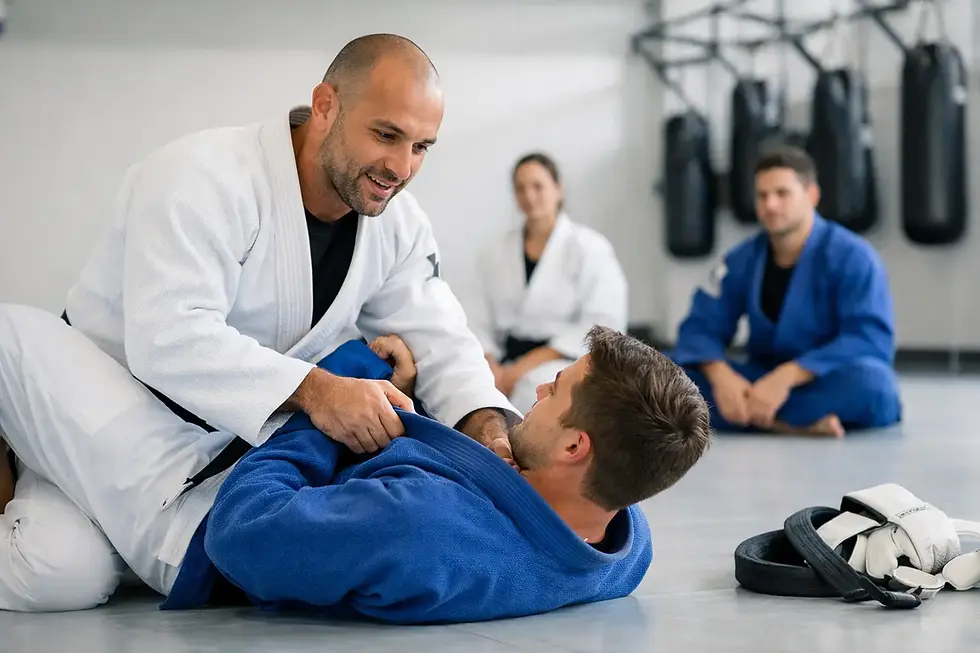
Brazilian Jiu-Jitsu builds a different kind of discipline. It is less formal in presentation than some traditional arts, but it can be extremely effective at teaching patience, problem-solving, and emotional control. Students spend a lot of time in uncomfortable situations and must learn to think clearly instead of panicking.
That lesson has real value. A student who keeps working through pressure develops composure that carries into school, work, and daily life. Many adults especially appreciate this because the discipline feels earned through live resistance, not just classroom rules.
Still, BJJ culture depends heavily on the academy. Some schools are humble and structured. Others are very competition-driven, which may or may not match what a family wants. If the goal is character development first, the training environment needs to support that goal.
Aikido
Aikido is often chosen by people who value self-control, harmony, and technical precision. It can be very good for discipline because it asks students to stay calm, cooperate, and refine movement over time. There is little room for reckless behavior if the instruction is sound.
For some students, especially those who respond well to a quieter and more reflective style of training, aikido can be a strong fit. It emphasizes awareness, control, and respect.
The trade-off is practical expectation. If someone wants hard sparring or fast-paced resistance, aikido may not feel satisfying. But if the purpose is disciplined movement, emotional control, and patient learning, it has real strengths.
Kung Fu
Kung Fu covers a wide range of systems, so it is harder to judge as one category. At its best, it offers strong tradition, demanding fundamentals, and a deep respect for discipline. Students may spend significant time on stances, forms, conditioning, and controlled repetition.
That kind of training can build excellent habits. It teaches patience and commitment because improvement is often gradual. Students learn that mastery takes time.
As with other arts, quality varies. Some schools preserve strong standards and serious instruction. Others lean more toward performance or spectacle. If discipline is the priority, it is worth asking how class time is actually spent and what behaviors are expected from students.
Which martial art is best for discipline in real life?
If your goal is broad discipline with practical self-defense value, traditional Japanese Jiu-Jitsu is hard to beat. It teaches respect and control, but it also connects those qualities to real-world readiness. Students learn that discipline is not about looking tough. It is about being prepared, responsible, and steady when it counts.
For children, karate and taekwondo are often strong choices because the structure is easy to follow and the expectations are visible. For teens, judo and Jiu-Jitsu can be especially effective because they combine discipline with pressure and accountability. For adults, the best fit often depends on whether they want a traditional environment, a modern self-defense focus, or a more sport-based challenge.
How to choose the best martial arts for discipline for your child or yourself
Watch how the instructor leads the room. Are standards clear? Are students respectful without being fearful? Is progress earned? These questions matter more than marketing language.
Also pay attention to the culture. A disciplined school should feel welcoming, not chaotic. Serious, not arrogant. Students should be challenged, but they should also be taught with patience and purpose.
Finally, think about what kind of discipline you actually want to build. Some people need focus and routine. Others need humility, resilience, or practical composure under stress. The best program is the one that develops those traits in a way you will stick with consistently.
A martial art should help you become harder to shake, not harder to reach. Choose the one that strengthens your character as much as your technique, then commit to the process and do the work.

Comments