7 Mistakes You’re Making with Situational Awareness (and How to Fix Them Fast)
- J-P Perron
- May 15
- 5 min read

We walk through the streets of Chesterville feeling a sense of peace. It’s a beautiful town, and we’re lucky to call it home. But sometimes, that peace turns into a "bubble" of complacency. We start to think that nothing bad can happen here, and that’s exactly when our guard drops.
At Vanguard Self-Defense Academy, we see students go through an incredible transformation: from feeling "distracted and vulnerable" to "alert and empowered." It’s not about living in fear; it’s about living with Zanshin (残心): the state of relaxed alertness.
"The best defense is not being there when the strike lands, but the ultimate defense is knowing the strike is coming before it’s even thrown."
If you’ve ever felt a bit "spaced out" while walking to your car or wondered how you’d react if a situation turned sour, this guide is for you. Let's break down the seven common mistakes people make with situational awareness and how we fix them fast.
1. 📱 The "Digital Blindfold" (Phone Addiction)
The Mistake: We’ve all seen it. You’re walking across a parking lot, chin tucked to your chest, scrolling through your feed or replying to a text. In that moment, you are effectively blind and deaf to the world around you. You’ve shrunk your field of awareness from 360 degrees down to a 6-inch screen.
The Fix: We practice the "Horizon Look." When you are in transition: moving from a building to a car, or walking down a sidewalk: the phone stays in your pocket. Keep your chin up and your eyes on the horizon. If you absolutely must check a notification, find a "hard point" (a wall or a corner), put your back to it, scan the area, and then look down.
Awareness. Presence. Connection.
2. 👁️ The "Tunnel Vision" Trap
The Mistake: When we get stressed or even just focused on a task (like fumbling for our keys), our peripheral vision shuts down. This is a physiological response called "tunnelling." You might see what’s directly in front of you, but you miss the person moving quickly toward your flank.
The Fix: We teach the "Scan and Breathe" method. Every few minutes, intentionally shift your focus from "near" to "far." Look at the people 20 feet away, then 50 feet away. Use your peripheral vision to notice movement without turning your head. At the Dojo, we train this through our self-defense techniques where we simulate multiple "threats" coming from different angles.
3. 🧠 Ignoring the "5-Second Rule" (Pre-Attack Cues)
The Mistake: Most people think an attack comes out of nowhere. In reality, there are almost always "pre-attack cues" that happen in the seconds before a situation turns physical. Mistake number three is failing to recognize these cues because we don't know what to look for.
The Fix: You need to spot the "Bad Situation" before it starts. Look for these "Anomalies" in the environment:
Target Glancing: Someone looking at your pockets, your bag, or looking around to see if there are witnesses.
The "Weight Shift": A person blading their body or shifting weight to their back foot (preparing to launch).
Unnatural Pacing: Someone walking toward you at a speed that doesn't match the environment.
In our Senshogo Ryu system, we focus on reality-based cues. If you can spot these within 5 seconds, you have enough time to change your path, cross the street, or get back into a store. Detect. Decipher. Depart.
4. 🤫 Silencing Your Internal Alarm (The "Gut Feeling")
The Mistake: We are socialized to be "polite." Often, our intuition screams at us that something is wrong, but we ignore it because we don't want to seem rude or "crazy." You see someone in an alley and feel a chill, but you keep walking because you don't want to hurt their feelings by crossing the street.
The Fix: We give you permission to be "unpolite" for the sake of safety. Your "gut feeling" is actually your subconscious brain processing thousands of tiny data points (scents, sounds, micro-expressions) that your conscious mind hasn't caught yet. If it feels wrong, it is wrong. Trust your intuition (Kukan). It’s better to be wrong and "rude" than right and a victim.

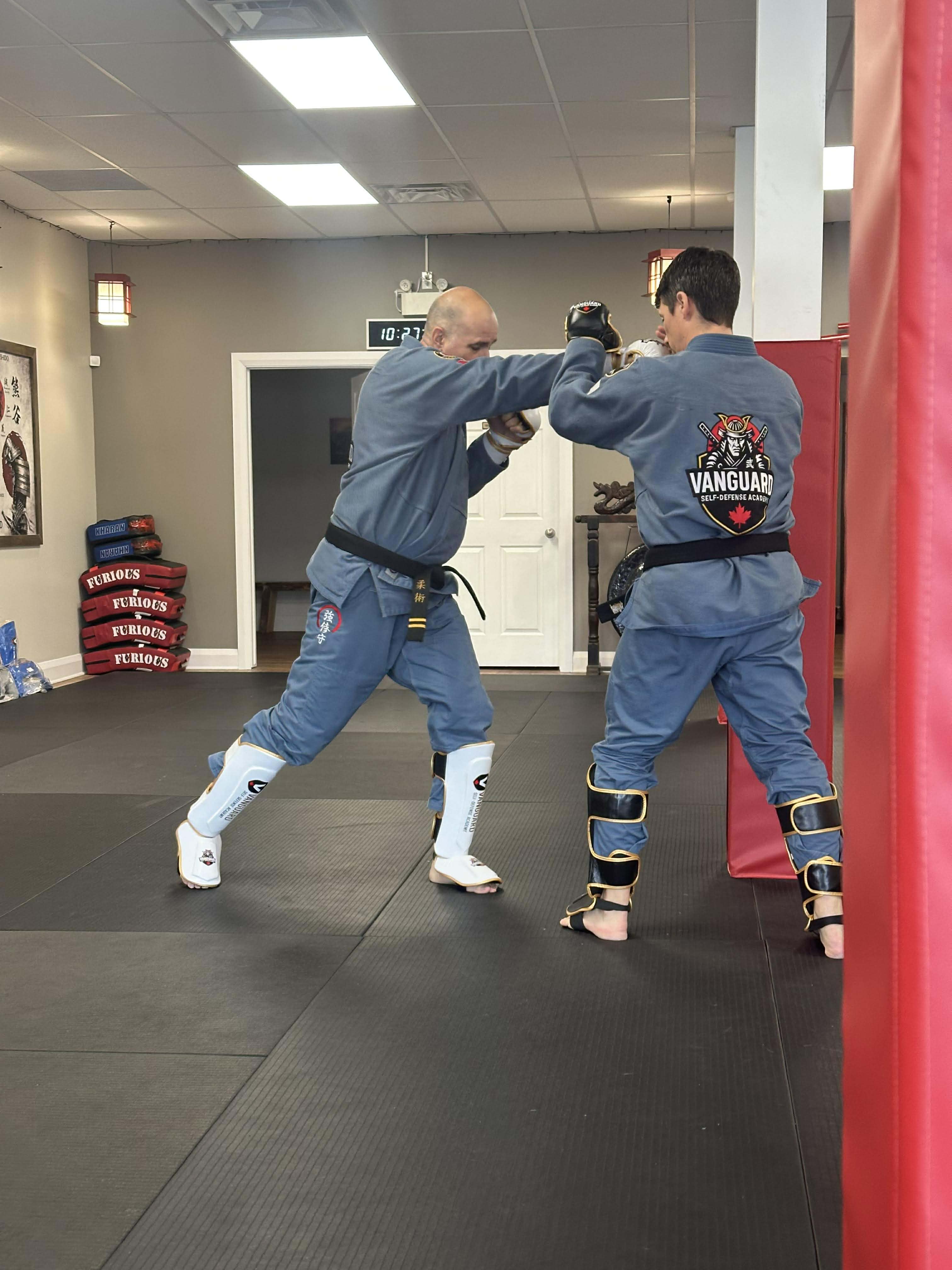
(Caption: Students practicing "The Fence" – a non-aggressive stance that maintains distance and allows for quick reaction.)
5. 🚪 Back-to-the-World Positioning
The Mistake: Walking into a coffee shop or a restaurant and sitting with your back to the door. This isn't just a "movie thing": it’s basic tactical positioning. When your back is to the main entrance, you are giving up 50% of your awareness.
The Fix: Make it a game. Every time you enter a room in Chesterville: whether it’s a shop or a friend’s house: identify the primary and secondary exits. Sit where you can see the "Fatal Funnel" (the main entrance). This isn't about being paranoid; it’s about being prepared. We call this "Tactical Seating," and it becomes a habit that lowers your anxiety because you’re never surprised by who walks through the door.
6. 🏔️ The "Chesterville Complacency" (It Can’t Happen Here)
The Mistake: Thinking that crime or violence only happens in "the big city." This mindset creates a false sense of security that makes you an easy target. Criminals often look for quiet communities exactly because people there have their guards down.
The Fix: Shift from a mindset of "It can't happen here" to "I am ready if it does." This doesn't mean being stressed; it means being capable. Whether we are doing ground work and grappling or standing striking, we train for the reality of a conflict, not the sport of it.
"Train like your life depends on it, because one day, it just might."
7. 🧊 The "Freeze" vs. The "Flow"
The Mistake: Observing a threat but having no plan, leading to a "freeze" response. When the brain is overwhelmed with a situation it hasn't practiced, it simply shuts down. This is the "deer in the headlights" moment.
The Fix: Use the B + A = D equation.
B (Baseline): What is "normal" for this area? (People walking dogs, kids playing).
A (Anomaly): What is "weird"? (A car circling the block three times, someone standing still in a dark corner).
D (Decision): If I see an anomaly, what is my move?
Having a "What If" plan for common scenarios prevents the freeze. If someone approaches me for money, I step back and create a "fence." If someone follows me, I walk toward a crowded area. At Vanguard, we help you build these "mental maps" so you can flow from awareness to action without hesitation.
From Nervous to Confident: Your Journey Starts Here
Becoming aware isn't about becoming a "tough guy" or "tough girl." It’s about becoming a hard target. It's about moving through the world with your head held higher, making eye contact, and feeling a deep sense of Belonging and Strength.
When you join our family at the Dojo, you aren't just learning how to punch and kick. You’re learning how to read the world. You’re building the confidence that comes from knowing you can handle yourself. You’ll find yourself standing straighter at the grocery store, being more present with your kids, and feeling a sense of calm that only comes from true preparation.
Preparation. Discipline. Confidence.
Ready to sharpen your skills?
We invite you to come see the difference for yourself. Whether you’re interested in our kickboxing fitness and sparring or our specialized Senshogo Ryu Jiu-Jitsu classes, there is a place for you here.
Don't wait for a "bad situation" to realize you weren't ready. Come try a session at Vanguard Self-Defense Academy. Let’s work together to make our community safer, one student at a time.
Click here to see our upcoming classes and booking options!
We can't wait to meet you on the mats.


Comments